
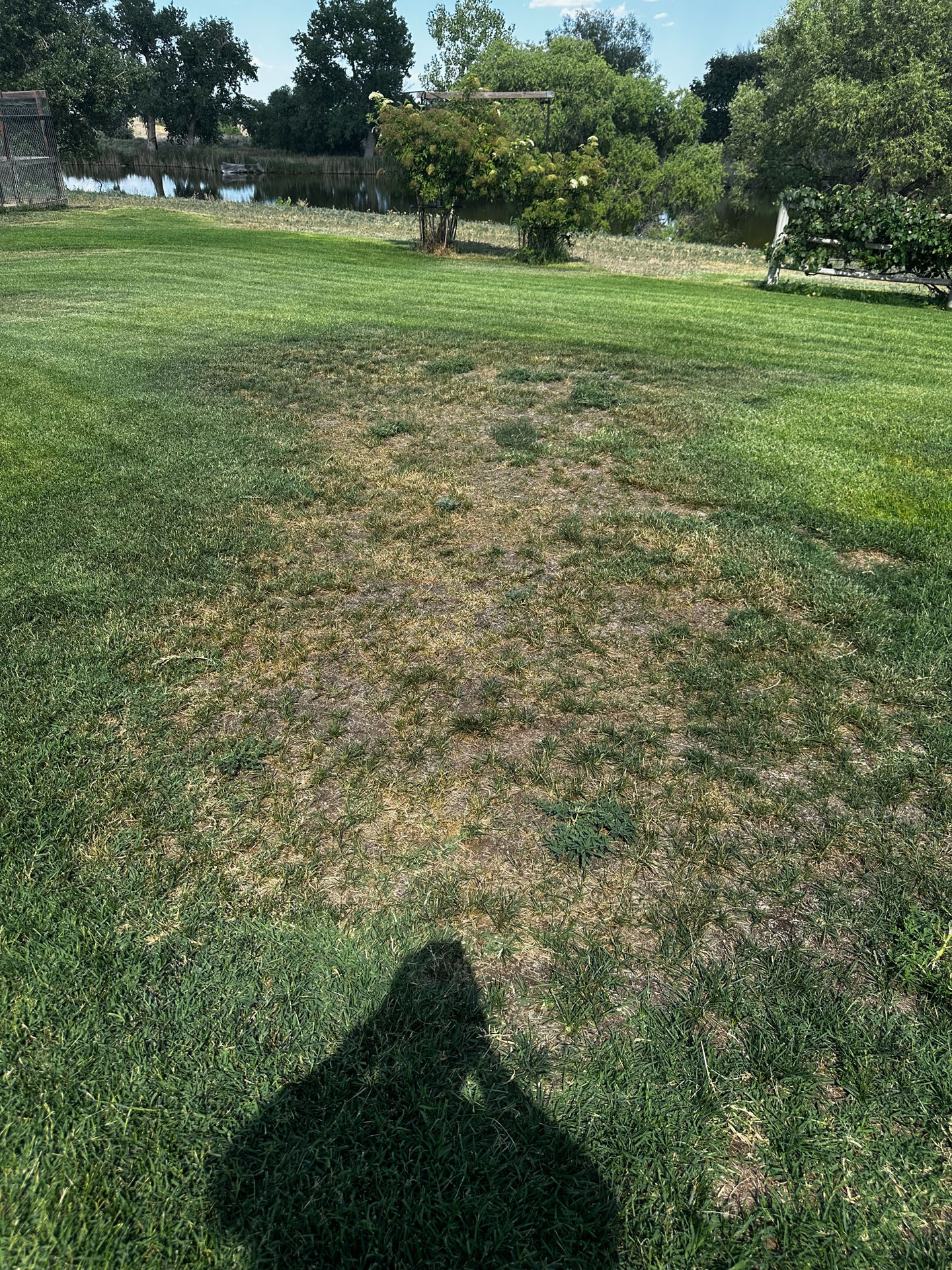
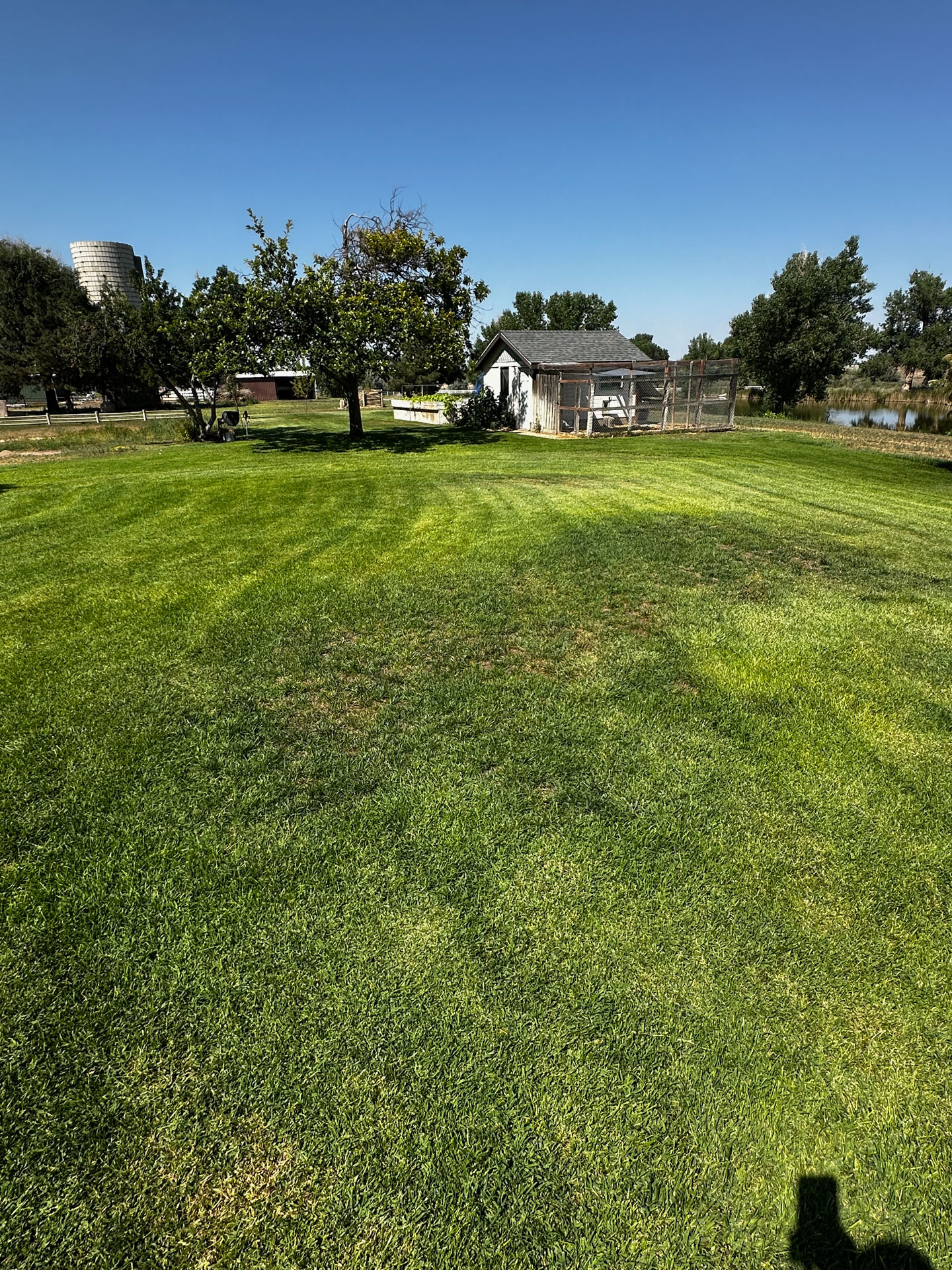
This one took some digging — literally and historically. The homeowners had built on an 11-acre property southeast of Longmont. Beautiful place: mature trees, a pond, open Colorado sky. But there was a strip of lawn that hadn't grown green in the ten-plus years they'd lived there. It burned out every season regardless of irrigation, seed, or product. Nothing worked.
When I walked the property for the Lawn Rx assessment, the pattern was too consistent to be random. A dead strip that precise, running in a straight line across an otherwise healthy lawn, means the soil itself has a problem — not the grass.
What was actually going on
Decades ago, a different home sat on this land. That home's laundry system drained into a leach field — and that leach field ran exactly where the dead strip is now. Over decades, the detergents, surfactants, and mineral buildup from that old system had altered the soil chemistry in a narrow band. The turf above it never had a chance.
The current owners had no way of knowing any of this. They'd been treating the symptom — dead grass — without any way to trace the cause. A standard lawn service would have thrown seed and fertilizer at it and called it done. That's not how Lawn Rx works.
Soil chemistry disruption from a historic laundry leach field — surfactant and mineral accumulation preventing root establishment. The grass wasn't failing. The ground beneath it was the problem.
The approach
Once we understood what we were dealing with, the treatment was targeted — not a broad application across the whole lawn, but a focused effort on the affected strip. The goal was to break down the accumulated buildup in the soil and give the turf a genuine chance to root in for the first time.
One week later, there was significant recovery across the strip. Not finished — these things take time — but the lawn was visibly responding where it had been dead for a decade.
That's the difference between guessing and diagnosing.