← Back to Lawn Log
Longmont
June 2025
11 acres south of Longmont — sod repair and fresh beds.
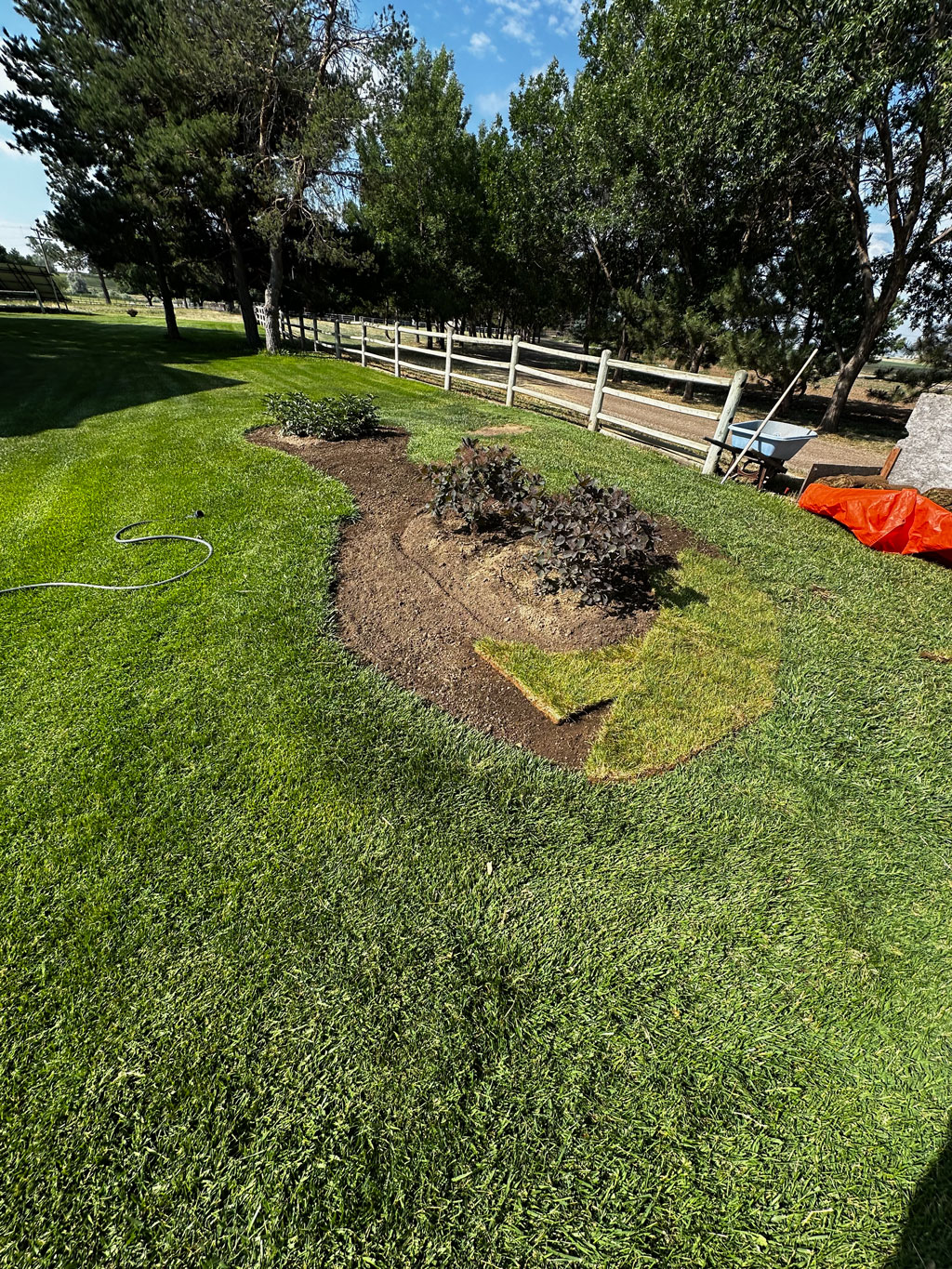
Not every job is a subdivision lot. This one is 11 acres south of Longmont — a working rural property with a beautiful old farmhouse and mature trees. The homeowners had some bare spots from winter damage and beds that needed fresh mulch. They wanted it looking sharp heading into summer.
Sod repair in the island beds
The center island beds had patches where the turf had died off along the edges — common where foot traffic and winter damage combine. We pulled the dead material, laid fresh sod to fill the gaps, and cleaned up the bed edges so the transitions were sharp going forward.
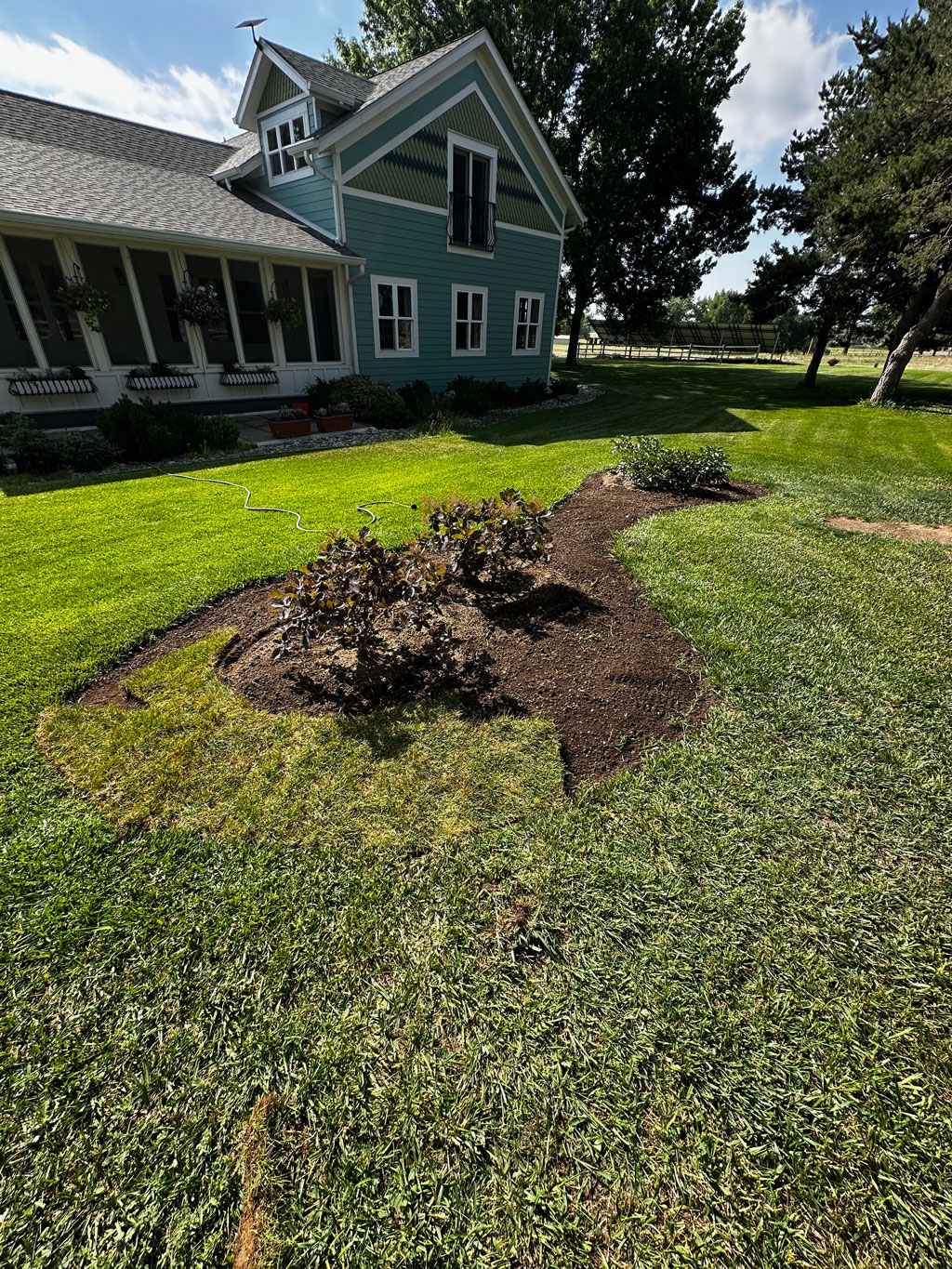
Mid-job — beds mulched
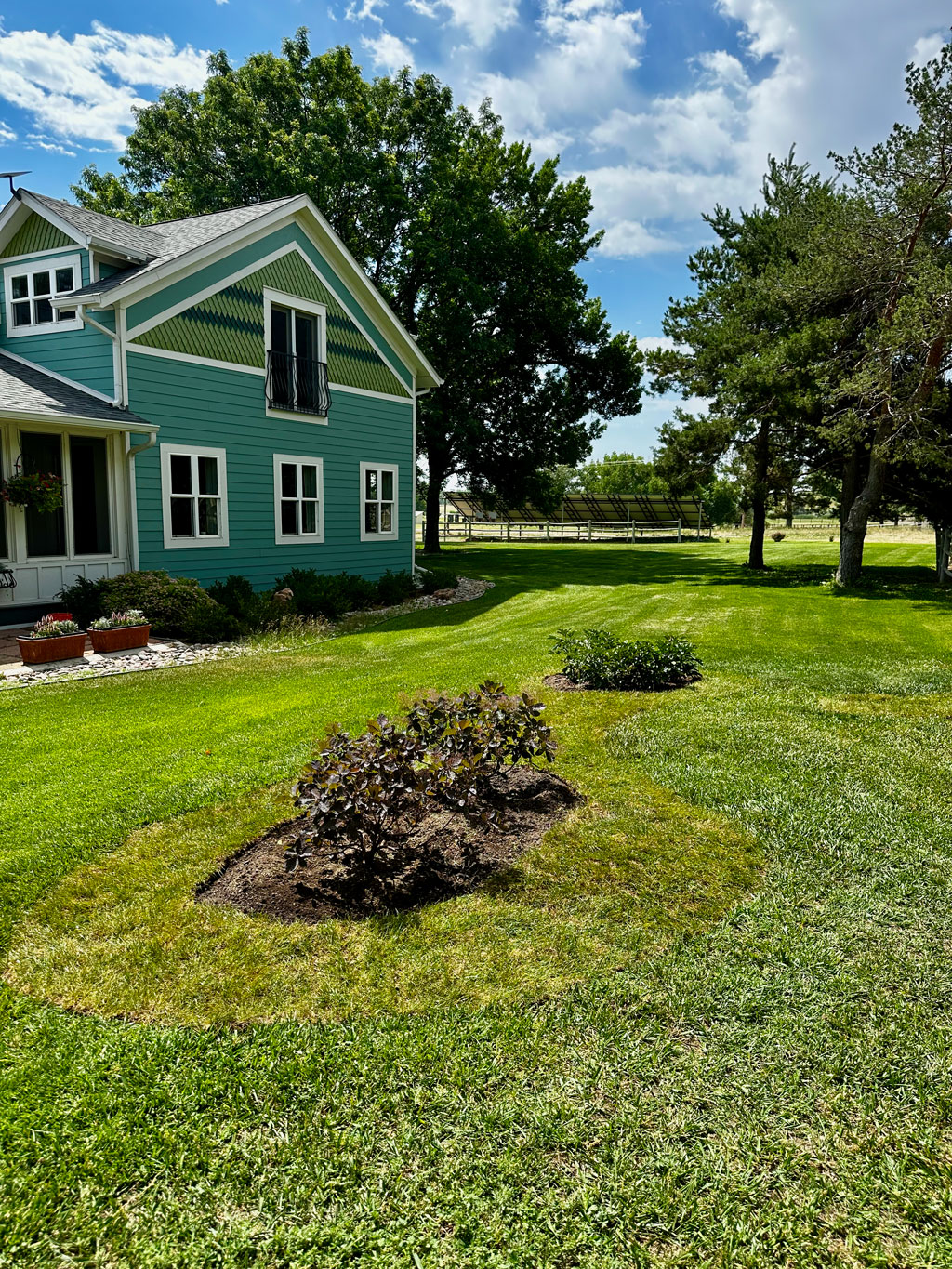
Finished
Fresh mulch in the beds
The island beds got a full refresh — old debris cleared out, fresh dark mulch laid around the shrubs. On a property this size, the beds anchor the lawn visually. Clean mulch makes the green pop and gives the whole yard a finished look even between mow cycles.
The result
Fresh sod knitting into the existing turf, clean bed lines, and dark mulch throughout. On a property this size the beds are what anchor everything visually — when they're tight and fresh, the whole place reads as maintained even between service visits.
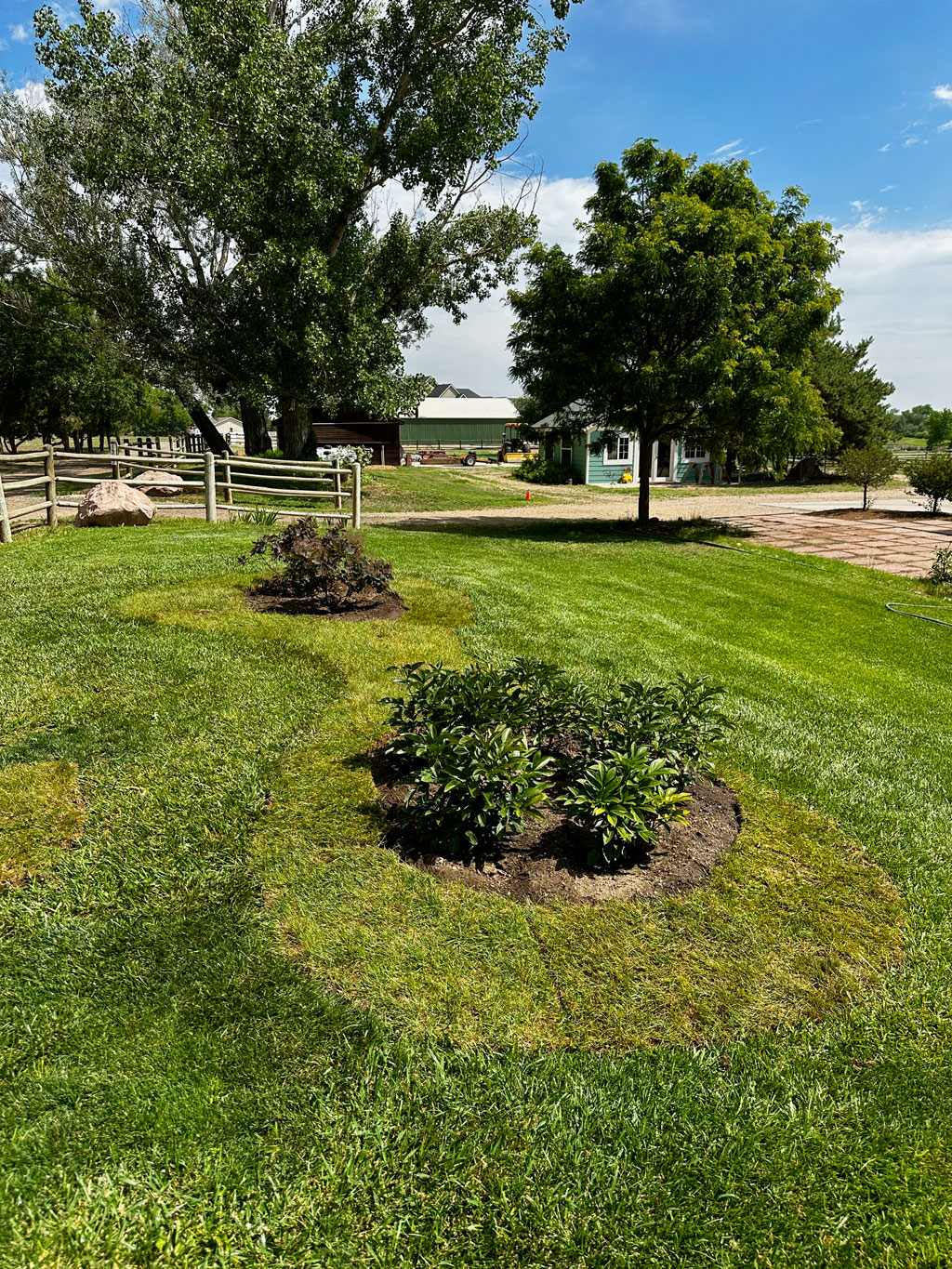
The finished result is what this kind of property deserves — tight beds and fresh sod knitting into the existing turf. It photographs well because it was done right.
Week 3 update — rooting in.
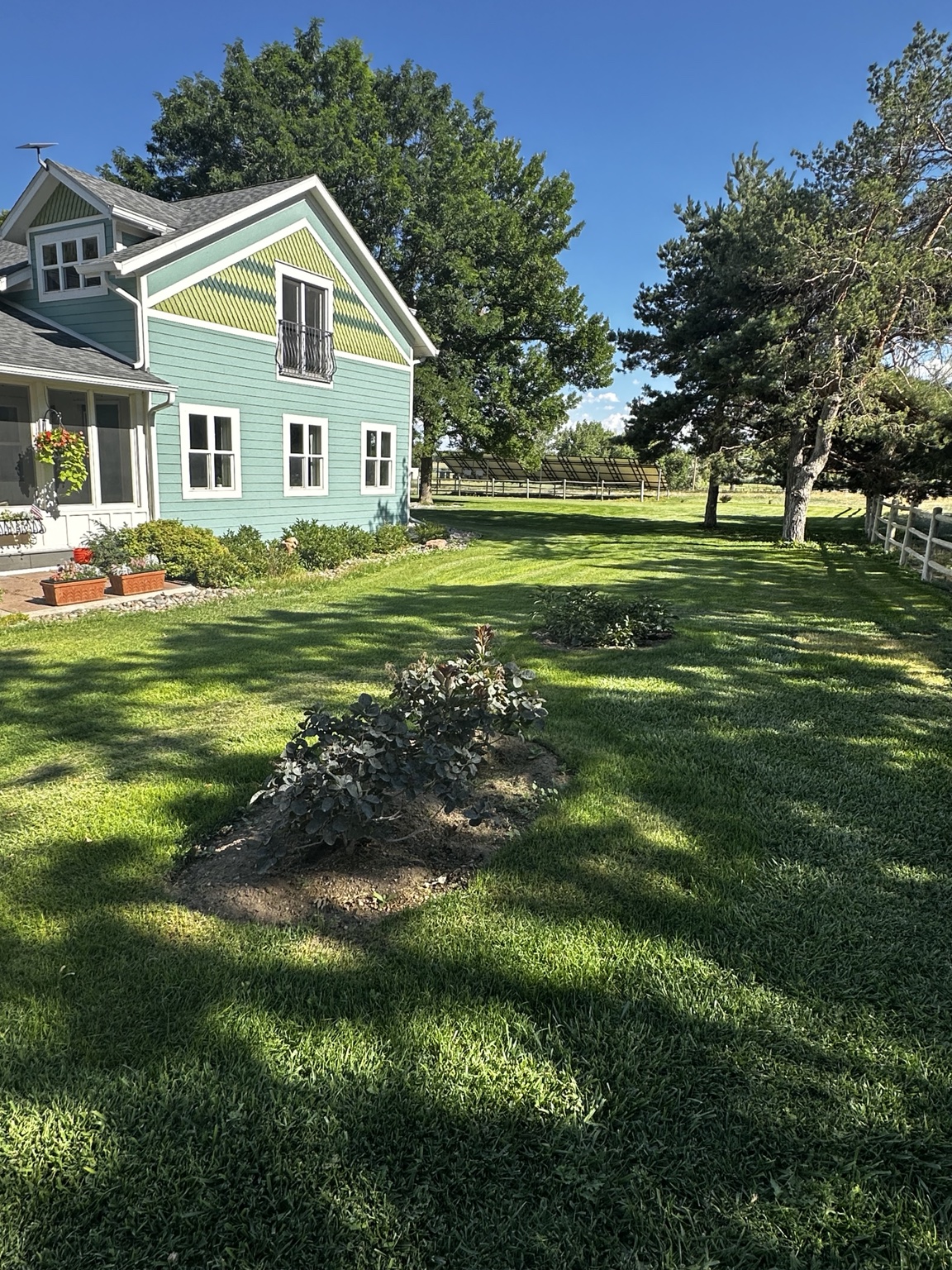
Three weeks out, the lawn is rooting in, filling out, and starting to look like it has always been part of the property. This stage is one of my favorites because it's where you find out if the plan is working.
Healthy sod doesn't just stay green — it establishes deep roots. That's what sets it up to handle Colorado's heat, wind, and dry conditions for years to come.
A lot of people think laying sod is the finish line. It's actually the starting line. The first few weeks are critical. Proper watering, the timing of the first mow, and knowing when to back off irrigation all determine whether you end up with a lawn that survives — or one that thrives.
What's next
We'll keep monitoring root development, begin transitioning to a deeper and less frequent watering schedule, and watch for any areas that need extra attention heading into the heat of summer.
If your lawn is struggling — or you're starting with new sod — don't guess. A solid plan almost always beats throwing products at the problem. Ask about our Lawn Rx program and we'll build a plan that gets better every week.